
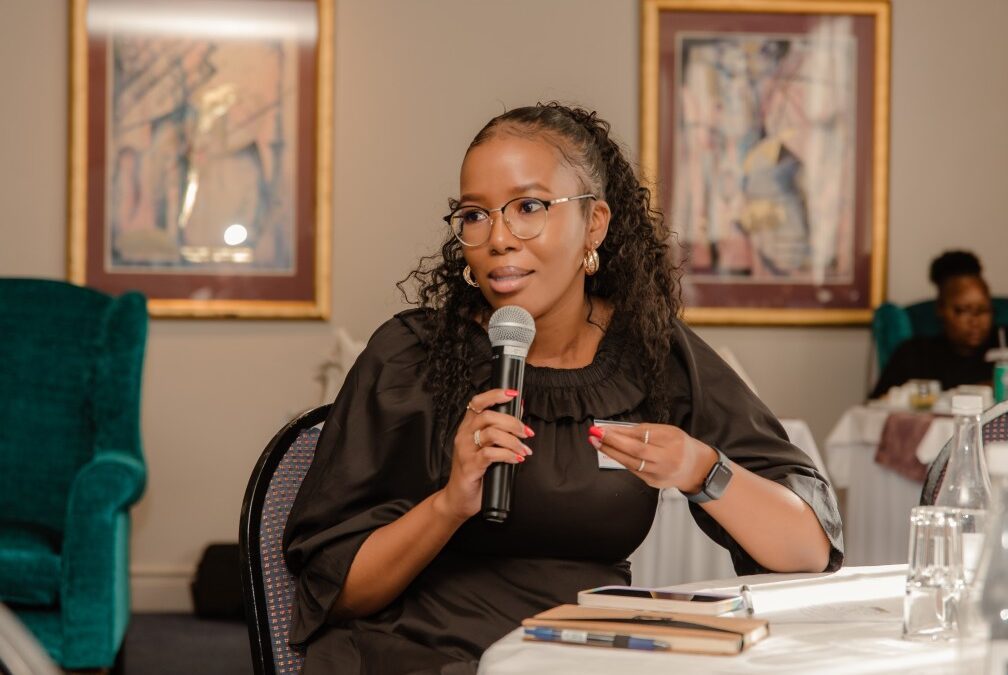
“We are building the plane as we’re flying, while lives are at stake. Is what we are asking of our people possible?”
These are the words of an NGO leader at our closing session for Cohort 6 of the DGMT Innovation Fellowship. Others went on to say more about this constant sense of pressing urgency and how it affects their leadership and innovation in six key themes.
Creating and facilitating platforms that bring communities closer
As leaders in the NGO sector we want communities to raise their voices and show agency at the very moment when they are most overwhelmed. At the same time, these are often communities that we struggle to engage with. What will leadership look like when we learn to engage and to lead from the point of view of building on the strengths of a particular community? If we try to understand and connect with the people in these communities who are themselves leaders and who bring assets and resources to bear on the problem, how then would we be leading? When we understand that communities are not unified and smaller groups are talking about the same problem but not with one another? Can communities participate in social processes that shape their futures? If we begin to think that way, then it’s not so much about individuals and decision-making and more about processes and practices, from people in a context particular to them, and then our call to leadership is about how to facilitate those processes and practices.
Finding and providing the right kind of support for one another
We hear constantly of leaders battling mental health problems or late stage cancer. We must be thinking of people’s health and mental health as core resources and plan budget, implement and report accordingly. The weight of responsibility of the role of leader as a socio-political thing is too great for one person to carry. Many of our leaders have cracked under the strain and grown sick. It can’t go on. Leaders burn out and it’s a real challenge to the sector to reflect on why this happens. They have to wear so many hats and juggle so much on multiple levels. Self-care and caring for each other needs to be recognised and incentivised. You get hired as a young leader, but you aren’t given the support required inside your organisation to reach your full potential. This can be very damaging.
Leading from within ourselves
It’s tough to lead from your way of being because it means allowing yourself to show vulnerability and to show it as a strength rather than as a weakness. For that, you need to know who you are. People absorb how you present yourself more than the actual words you say. You can show uncertainty if its authentic without making your team nervous because people trust an authentic sense of not knowing something far more than a false sense of certainty and they can pick it up in your demeanour. But, to be authentic on that level, you need to know yourself very well and that takes hard work and is hard won. Not all leaders prioritise this work on self.
Prioritising time to step aside and reflect
When we operate like this, we also don’t take the time to reflect and stand back and study the situation. We don’t take the time to carefully review our information and risk being misinformed and making terrible mistakes. When are we going to budget the time and money for this kind of reflection? When will we start asking donors for these kinds of resources as a priority? We need to cultivate internal processes that allow staff to plan their time for the whole year in a way that gives them the spaciousness to think, to spend time on what they are passionate about and talented at and to prioritise their growth. The whole organisation needs to step aside from the day-to-day at regular points and reflect freely, to find a different rhythm and to think about the wellbeing of the organisation. There are many different ways of doing this.
How can we have greater sectoral influence?
It’s challenging as a leader to realise how little influence we have. The agenda is being set for us and it’s being set elsewhere. What is our capacity to shape the future as leaders? As leaders we get caught up in things and fail to listen for understanding. This is a challenge. It’s daunting how much information we must now consume and the sheer volume of individuals and stakeholders we must engage with not knowing any other leaders to consult and share with. Change in the sector has ripple effects across organisations and groups of organisations. As organisational leaders, we never get to meet together over and over, say on a quarterly basis year in and year out to talk about the demands of organisational and sectoral life.
Collaborative leadership
How do you build organisational resilience as a leader, with a more shared, collaborative leadership style that infuses the entire organisation? How do you build organisational systems that actually foster co-creation? Are we skilled enough to learn how to listen, to let go, to share power, to not need to be so much in control? We might talk about succession, we might build skills and competencies, we might cultivate new competencies and practices. Think about what we do. Who else might enjoy that work? Who might have the skills or want to build the skills that go into doing that work? Who might want to fit in and support their leaders, who might want to step in? What makes for an environment of co-creation? Not everyone knows how to do co-creation. Some people need to learn how.
Learning how to co-create effectively requires a mindset shift towards collaboration, openness, and inclusivity, as well as the adoption of facilitation skills, communication techniques, and iterative approaches that foster creativity, innovation, and value co-creation. By embracing these principles and practices, individuals and organisations can harness the collective intelligence and creativity of diverse stakeholders to drive meaningful change and achieve shared goals.