
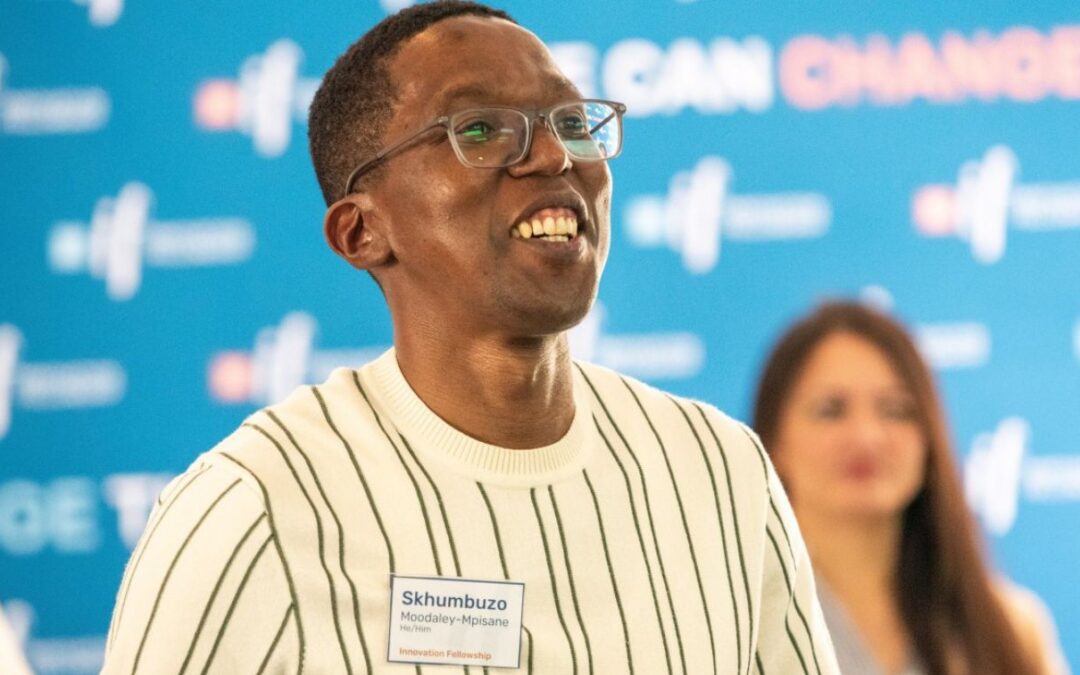
A short reflection from Skhumbuzo Moodaley – Mpisane
In 2014, I officially moved to Gauteng for work. Like many South Africans who grew up outside Johannesburg, Soweto was a place I knew long before I ever visited it. I knew it through stories, history books, and perhaps most memorably, through Sarafina! (if you know, you know).
As a child, I watched Sarafina! countless times. Even today, I can still remember many of the scenes. Strangely, one of the things that has stayed with me all these years is how Crocodile pronounced Sarafina’s name, and yes, if I am honest, what happened to Crocodile still pains me. What struck me then, and continues to strike me now, is how people could still find reasons to laugh, love, and dream while living under such profound injustice. Amid oppression, there was still joy. Amid fear, there was still HOPE.
Perhaps that is why, when I moved to Gauteng, one of the first things I wanted to do was visit Soweto. A colleague, who would later become a close friend, joined me on a number of those early explorations. We did what many newcomers to Gauteng do: we visited places we had heard about our whole lives, trying to connect the history we had learned with the places where it had unfolded.
On one of those trips was to the Soweto Theatre, reflecting on the events of 16 June 1976, a question emerged in our conversation. Had I been a young person in 1976, would I have been brave enough to throw a rock at the police? It was not a question about violence, but it was a question about courage. Would I have stood with the thousands of young people who marched against an unjust system? Would I have been willing to risk my safety, my future, my good looks, or even my life for something I believed was right? Would I have found the courage to resist when resistance came at such a high cost? More than a decade later, I still find myself returning to that question every June, and the truth is, I do not know.
I would like to believe that I would have stood alongside the students of 1976. I would like to believe that I would have been courageous. However, I’m also aware that history asks very little of us when viewed from the comfort and safety of the present. The young people who marched that day did not know that history would remember them. They did not know that their actions would help change the course of a nation. They only knew that what was happening was wrong, and that remaining silent was no longer an option.
As I have grown older, now in my 40s (4th floor vibes), however, I have come to realise that perhaps I have been asking the wrong question. Perhaps the question is not whether I would have thrown a rock/stone. Perhaps the question is whether I am willing to stand up against injustice in my own time, because every generation faces its own version of that choice.
The injustices of today may not always look the same as those of 1976. They may be less visible, less explicit, and often more complex. Yet they are all around us. We see them in unequal access to education, persistent poverty, unemployment, gender-based violence, corruption, exclusion, and the many barriers that prevent people from realising their potential.
The challenge before us is not to replicate the actions of the youth of 1976. It is to embody the same spirit that inspired them. That spirit was never about throwing rocks. It was about refusing to accept injustice as normal. It was about believing that young people have agency. It was about choosing courage over comfort and, perhaps most importantly, it was about HOPE.
The students of 1976 marched because they believed a different future was possible. Even when the odds were stacked against them, they refused to surrender their belief in change. That lesson feels particularly important today. Across South Africa, it is easy to become discouraged. The challenges we face are significant and often overwhelming. We are constantly confronted by stories that remind us how much work remains to be done. Cynicism can feel easier than hope. Withdrawal can feel safer than participation.
Yet history teaches us that progress has always depended on people who refused to give up. In my work with young changemakers, I am reminded of this every day. I meet young people who are tackling challenges in their communities, building organisations, creating opportunities, and imagining solutions where others see only obstacles. Their work may not make national headlines. They may never become household names, but they share something important with the young people of 1976: a belief that things can be different, and a willingness to act on that belief.
That is why June 16 matters. It is not only a day of remembrance. It is a day of responsibility. We honour those who came before us not simply by telling their stories, but by continuing their work. For some, that may mean speaking out against injustice. For others, it may mean building stronger communities, mentoring young people, improving public services, creating jobs, supporting social innovation, or strengthening democratic institutions. Courage takes many forms. What form does it take for you?
The methods may change, but the mission does not. As Fellows and Alumni, we understand that meaningful change rarely happens because of a single heroic act. More often, it happens because ordinary people choose, again and again, to take responsibility for the future they want to see. That is the invitation that June 16 extends to each of us. Not to compare ourselves to the heroes of the past. Not to wonder endlessly what we might have done in their place, but to ask ourselves what courage requires of us today.
The young people of 1976 carried a vision of a better South Africa. They paid a price for that vision. Many never had the opportunity to see the freedoms that future generations would inherit. I believe that we owe them more than remembrance. We owe them action. We owe them our commitment to continue building a society that is more JUST, more INCLUSIVE, and more HUMANE than the one they inherited.
The unfinished work of 1976 does not belong to young people alone. It belongs to all of us, in the 4th, 5th, etc. floors, and perhaps the greatest tribute we can pay to those who marched is to ensure that, in our own way and in our own time, we never stop marching forward.