
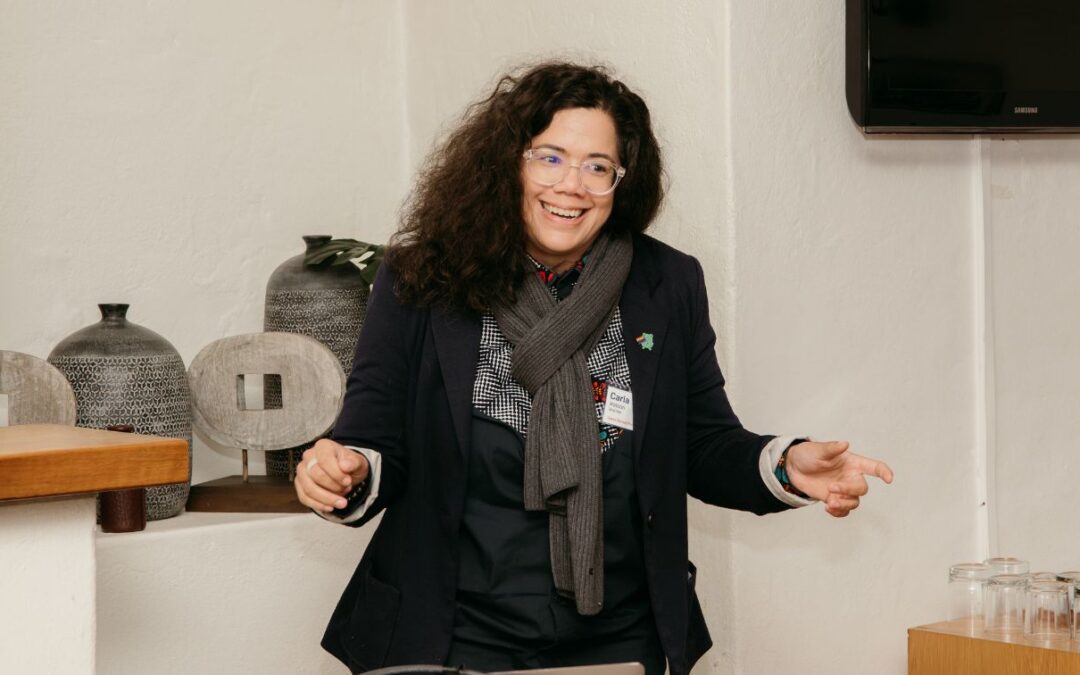
When I was selected for the DGMT Innovation Fellowship in late 2024, I thought I knew what I was stepping into. I was wrong – in the best possible way. I had thought the Fellowship would be theoretical with a strong focus on my organisation, but instead the Fellowship struck a beautiful balance between my development and my organisation’s. The Fellowship stretched me, challenged me, and reminded me that leadership and innovation begin with who you are, not just what you know.
The World Economic Forum’s Future of Jobs Report 2025 highlights that the top skills of the future aren’t purely technical. Creativity, resilience, and self-awareness are at the forefront. This rings true for me: in the 21st century, how you show up as a leader matters as much as your expertise. The Fellowship ignites these qualities, not through force, but through intentional and reflective practices within strategic leadership. For example, despite a high volume period of responsibility and deliverables this year, I scheduled 30mins daily to call a beneficiary on my programme. I didn’t always get the time to do so but I shifted my focus daily towards the person impacted in my work. This was a total game changer in my approach – to everything – as I chose to ground my strategy and impact as a senior leader.
One of my biggest takeaways was the value of getting to know yourself. We explored emotional intelligence, self-awareness, and personal leadership – because you can’t shift a team, strategy, or system if you don’t understand the impact of how you show up within it. I didn’t have an expectation on this before the Fellowship, but when graduating it became clear.
Fellowship reminded me how important it is to be self-aware and embrace one’s autonomy in their leadership. Change through ideas though only come to life when people believe in them, adopt them, and are willing to help make them real. Building a community of adopters – champions of the vision – is essential for any systemic shift.
Leadership in innovation is not about consensus, which often slows momentum. It’s about meaningful consultation: inviting diverse voices in, listening deeply, and then moving forward with clarity and conviction. Innovation is less about the next shiny tool and more about the people and communities who can turn prototypes into lasting change.
One of the most personal shifts I experienced during the Fellowship came through the Enneagram leadership coaching. My coach reflected evidence of my integration – expanding beyond the patterns of my core type and adopting the strengths of my growth type. This kind of transformation is never easy, but it’s profound and lasting. I’ve even had feedback from others on the visible shifts in how I lead, listen, and engage.
The DGMT Innovation Fellowship has reminded me that systems change isn’t about chasing trends but about cultivating leaders, building trust, and creating momentum through shared purpose. As I step into the Alumni body, I carry forward the lessons of confidence, compassion, and strategic clarity – qualities I hope to amplify across the civil society and innovation sectors I get to work within.
Innovation is, at its heart, a collective act. And I am deeply grateful for the opportunity to continue building movements that matter.
Written by Carla Watson