
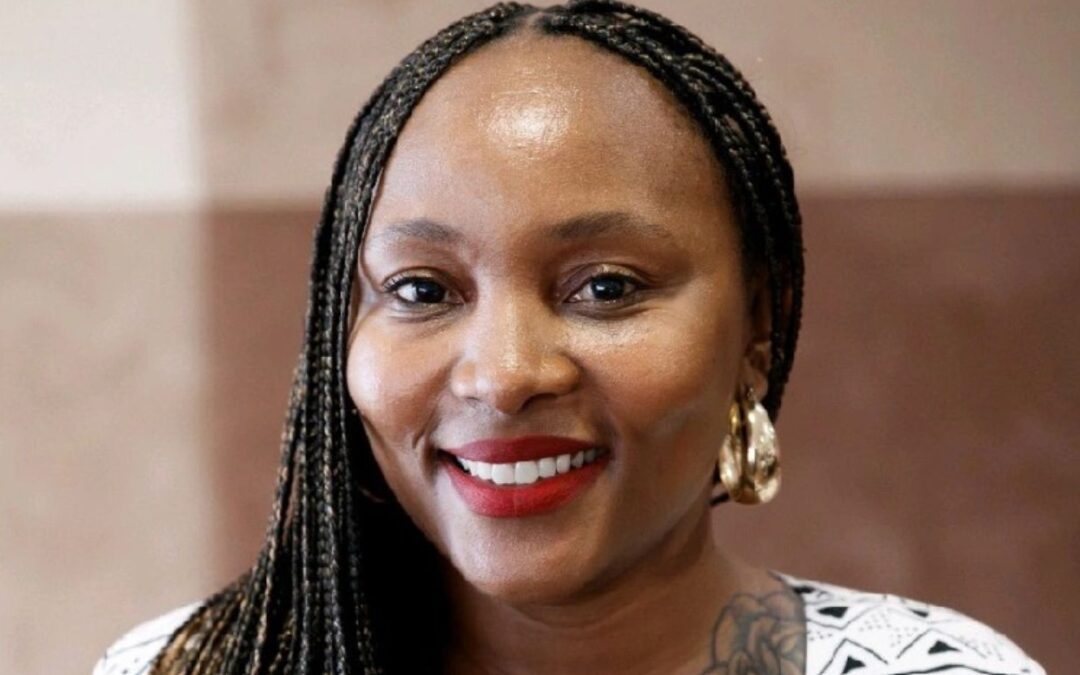
When Andisiwe Hlungwane speaks about the DGMT Innovation Fellowship ‘The Fellowship,’ she doesn’t describe it as a typical professional development opportunity. For her, the Fellowship was not merely about the growth of two individual team members; it became an opportunity to shift how the entire Teachers CAN team approached scale, strategy, and shared leadership.
When discussing scale, Andisiwe reflects on the team’s learning journey: What does it look like when something isn’t just held by one person, but truly becomes embedded across a team -and a network?
Rethinking Leadership in a Small Team
Teachers CAN is a small yet dynamic team of five. Their work is national, ambitious, and often deeply personal- it centers on changing how South Africa perceives and supports its teachers. With such an extensive reach, strategy cannot reside solely with one individual. Everyone must carry a part of it.
“You wouldn’t believe there are only five people working on this project,” Andisiwe laughs. “So, it’s important that we all hold strategy and all see ourselves as leaders.”
This aspiration for shared ownership and distributed leadership was one of the primary reasons Teachers CAN decided to participate in the Fellowship. They needed to build a team capable of holding complexity, planning for sustainability and adapting swiftly. The Fellowship provided both the space and the structure to achieve this.

Not Just a Fellowship—A Network
Initially, the Fellowship began with two core learning questions—one for Teachers CAN and another for their sister initiative, Parent Power.
The Teachers CAN question evolved into: How do we build meaningful engagement across network levels in a way that fosters ownership and encourages organic growth?
But what exactly is this network?
In the context of Teachers CAN, the network includes both the teachers who participate directly in the programme and benefit from its support firsthand — and the broader circles of influence they create in their schools and communities. These are the teachers who take what they’ve learned, apply it within their own contexts, and actively bring others into the fold through local Connects: community-based groups where teachers collaborate, share insights, and lead change together.
This vision of scale as organic and networked, rather than top-down, represented a significant shift. The team began to imagine a future where change-agent teachers are not simply programme participants, but lifelong members of a living, breathing network.
For Parent Power, the learning question also evolved. Initially focused on capacitating parents, it became: How do we build a sustainable school-parent partnership model? This shift indicated a deeper understanding of systems and relationships, as well as a commitment to embedding meaningful change at the school level.
Growing Through Complexity
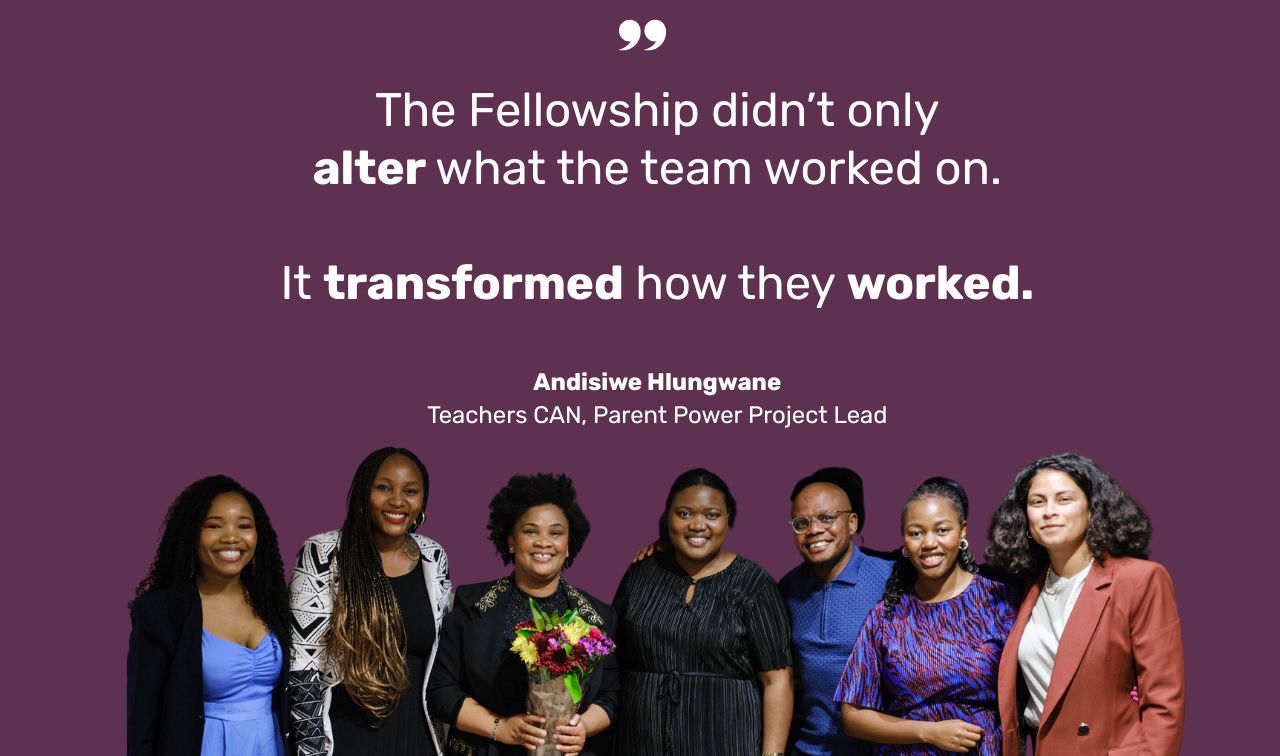
The Fellowship didn’t only alter what the team worked on—it also transformed how they worked.
Andisiwe shares that there was considerable capacity building around workplace interactions and engaging as young leaders. The experience encouraged the team to hold complexity openly, letting go of fixed methods or solutions they once regarded as essential.
The team discovered better ways of collaborating, cultivating openness, and psychological safety.
“We found better ways of working with each other,” she adds. “There’s an openness now, a sense that you can ask questions or challenge something without fear of stepping on toes.”
Building a Rhythm of Reconnection
One subtle yet powerful shift was the team’s intentional creation of space for reconnection. This wasn’t necessarily about pausing completely but learning when to step back, recalibrate, and ensure the team was moving forward together.
Andisiwe describes how the team created more opportunities but to momentarily set tasks aside and reengage strategically. This ensured everyone was informed, aligned, and moving forward together.
In a fast-paced, nationally scaled, and deeply this rhythm of reconnection has allowed the Teachers CAN team to remain clear, aligned, and agile.
Co-Creation, Not Silos
Although the Fellowship had an individual focus, Andisiwe emphasises that the work never felt detached from the broader team. The learning questions evolved through collective inquiry, supported by a coach who engaged both the fellows and the organisation as a whole.
The Fellows were not working separately, returning later with surprise changes in direction; the team was figuring it out together. This co-ownership made the resulting shifts more meaningful and practical to implement.
Turning Strategy into Shared Practice
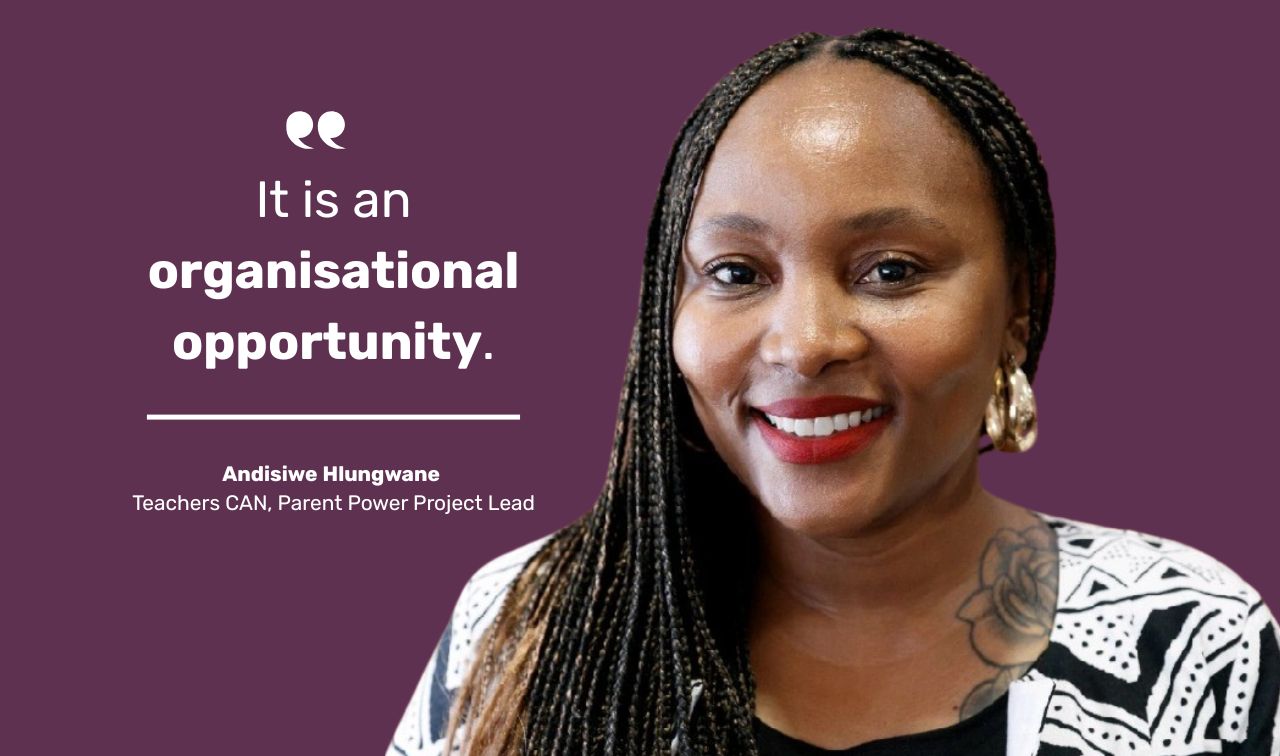
When asked what advice she would offer to another organisation considering the Innovation Fellowship, Andisiwe responds clearly: “Organisations shouldn’t view it merely as an individual growth journey but rather as an organisational opportunity. It should be used to unpack significant questions, allowing the team to collaboratively address them.”
She adds that for the Fellowship to truly have an impact, the organisation needs to bring forward questions that are real and meaningful. Easy or superficial questions are easily sidelined; however, tackling real, complex problems as an organisation can result in substantial impact.
Microcosms of Change
What’s next for Teachers CAN? More network-building, greater strategy-sharing, and further scaling through connection.
Andisiwe observes the emergence of small, powerful microcosms nationwide—pods of teachers deeply connected to their identities as change-agent educators and actively embodying the Teachers CAN manifesto. According to her, this is where the real impact lies.