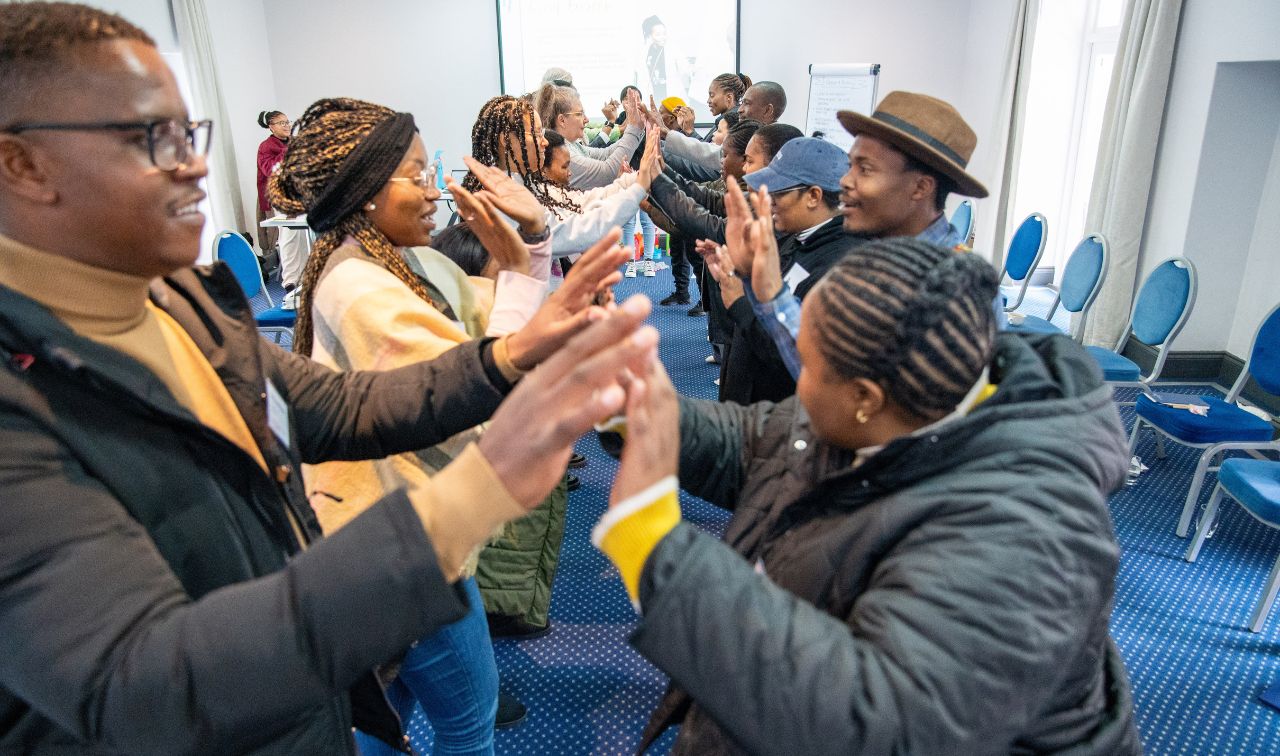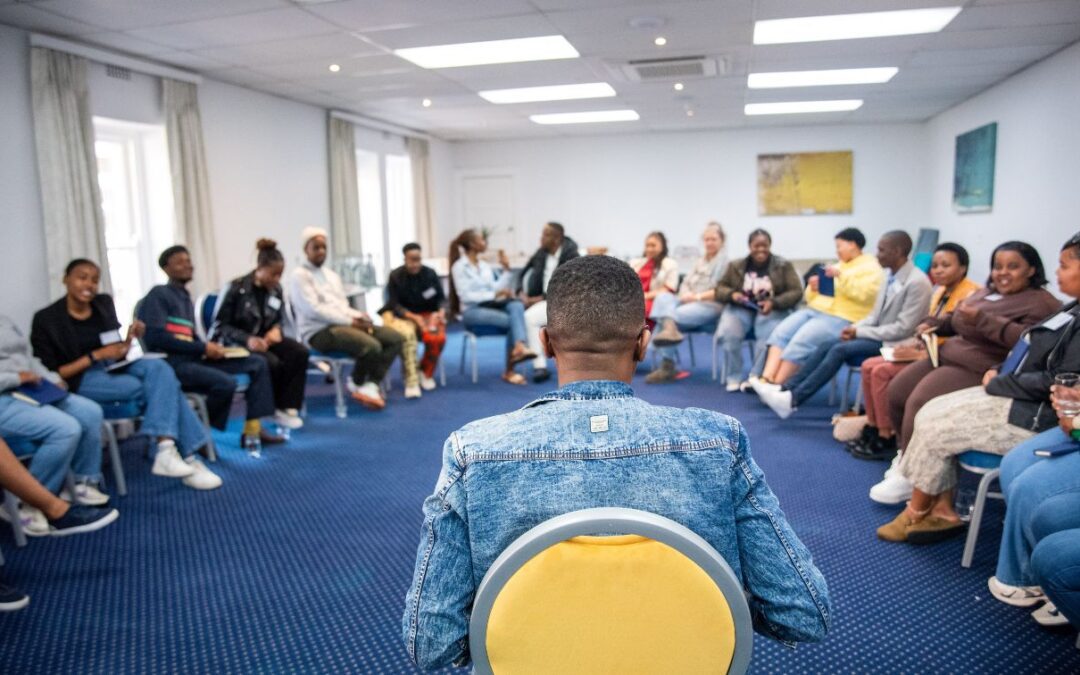
While it can be a joy to meet in fellowship with a cohort of like-minded people doing the same work you do, it can also leave you feeling a little manoeuvred. In the daily course of your work, you are obviously aware of the bigger sector you work in, but often in a very abstract or peripheral way. Then you join the DGMT Innovation Fellowship, and you meet in person with a larger group of people who represent this sector under the leadership of a team dedicated to strengthening the sector as a whole, and then it becomes real. Suddenly, you are in a room with people who talk about the things that bother them and excite them, and they are the same things you worry about and take joy in. The landscape you work in expands rapidly into a much bigger, wider world. A much more complex world. A much more complex work. You might not be sure whether this is exactly what you signed up for when you applied.
One Fellow said at the end of Immersion 1: “I thought I was getting into a pool but now I see it is an ocean.”
The application process for joining this 12 month immersive Fellowship on leadership and innovation is not complicated. Neither is it completely straightforward. This year we looked for applications where the innovation challenge that an organisation chose to address as a case study for the year was at least to some degree owned by both the two Fellow applicants and the organisational leader, and where the Fellows clearly were positioned and had the capacity to work directly on the challenge to good effect. We want it to be a case study, yes but if it stands a chance of making it off the drawing board and into the real work then we want that chance to be a good one.
When we all came together for the first time it was remarkable to see how quickly Cohort 8 got it. They understood that what is asked of them might not be a small thing. An innovation challenge is something that brings them into contact with the shadow side of their organisation or community, with what is not working or not working out the way it should.
Is it daunting to stand in front of a problem like this, looking it in the eye? It is!
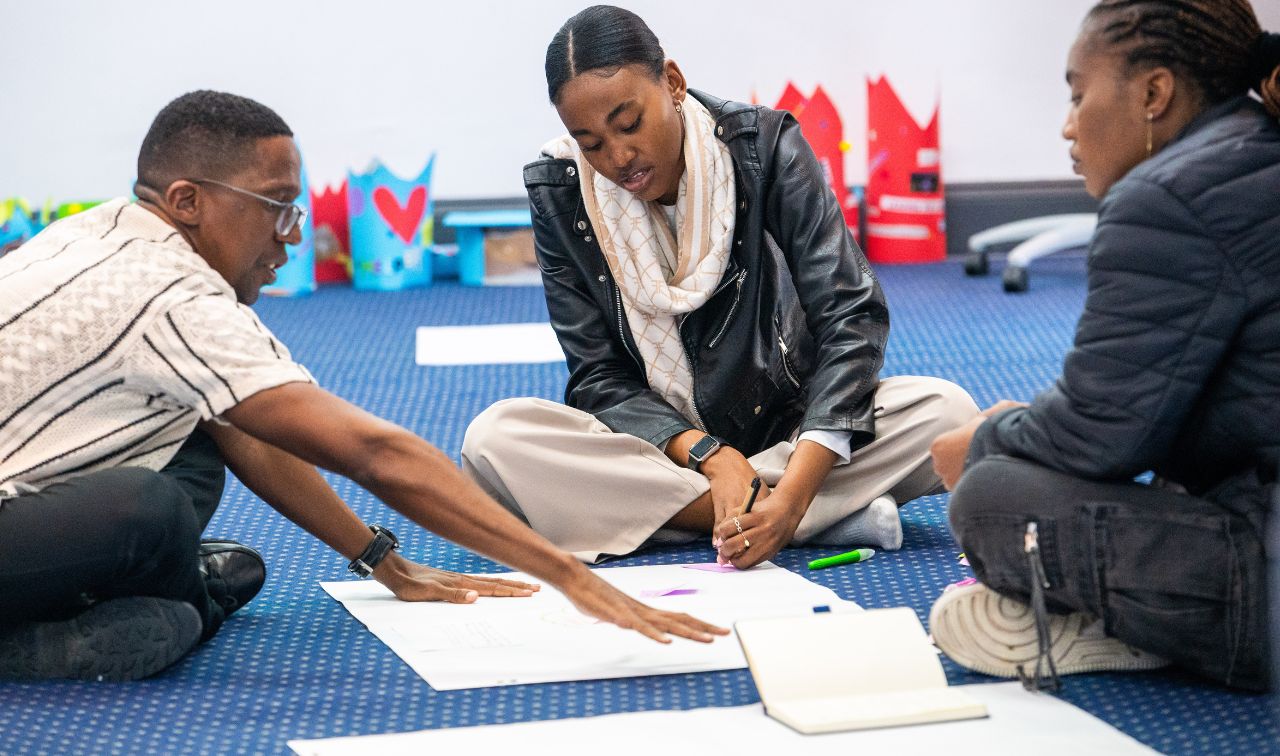
Luckily, you are in good company. Organisations in this cohort are doing incredible work in fields like the holistic development of local rural or peri-urban communities, mental health work with children and adolescents, music education and literacy for children through reading for pleasure, supporting young adults to access quality education both at school and beyond and access meaningful employment, supporting South Africans to access their socio-economic, education, labour and health rights as well as focusing on food and climate justice. These organisations shed a powerful light on some of our most complex social problems
Development work usually happens at two levels: encouraging community groups to claim their right to a share of resources from government and nurturing the energies of a community to find alternative ways of meeting their own needs in a spirit of self reliance while waiting to claim their rights. Both levels are covered by the organisations in Cohort 8, who are working on the ground to deliver services but also working on the ground and with bigger social structures like the government to uphold people’s rights.
Working at these two levels to bring about social transformation in our country means building skills of leadership and innovation. We need to gather people together, improve our communication, learn to listen to each other and to share insights, diagnose together our unmet needs, analyse the causes of our problems, plan and act together in groups, in organisations, in sectors, and in movements, and in so doing strengthen the social and or political bonds between us.
We began to do this during Immersion 1 by turning the focus inwards onto ourselves and who we are and where we come from. Deeper reflection and introspection happened alongside finding likeminded people and learning from them. It was fun, it was practical and it was also conceptual. There was a sense of listening both inwardly and outwardly. There came the idea of listening into our organisations, to our leaders, to our communities more and getting perspectives that may stretch us. Our conversations ranged far and wide and the sector we work in came under much scrutiny as we explored and thought about systems from the individual, to the group, to the community, to society.
In the process of deepening our questions about challenges faced by our organisations and the communities we work with, we also surfaced questions about the sector. The first concerned overload and it’s a question this Fellowship team has heard before from leaders at the closing session of Cohort 6. We receive a large amount of information from diverse sources, on different platforms, in different forms and on many levels. This, together with the pressure of little time and high volumes of work, makes it hard for us to read for understanding.
This affects our decision making. It’s a risk, one that we don’t often speak of. How might we even begin to address this
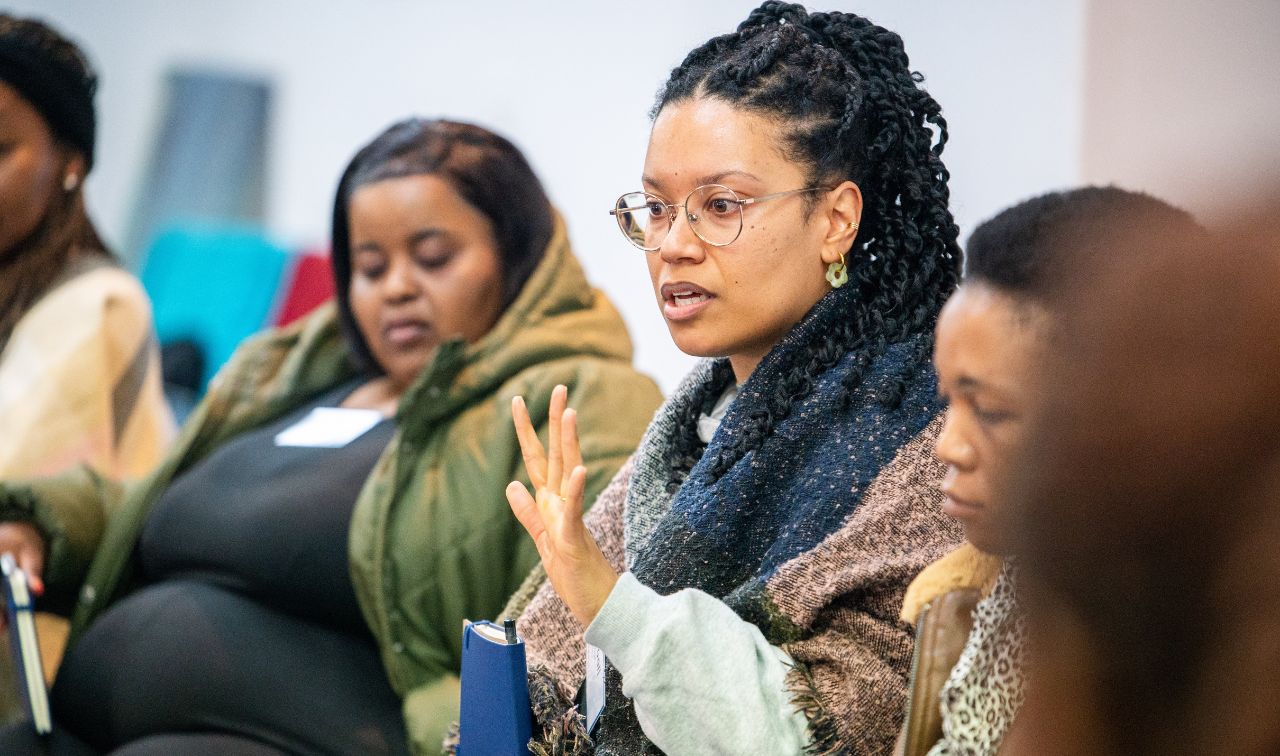
Next we looked at collegiality, the companionship and cooperation between colleagues who share responsibilities, as a vital part of an organisation’s culture. What is my responsibility and how do I play a role in nurturing a spirit of collegiality in my team and in my organisation? This led us to talk about organisations where this spirit has been damaged or eroded for some reason. We need a strong reason to overcome our resistance to the messiness of repairing or restoring a culture that has been harmed or broken. How might we remind ourselves that we are better together? And lastly, how might we address our different forms of blindness, especially structural blindness, meaning the blind spots in our perceptions and understanding as a result of how we are positioned in an organisation, a system or a structure?A process where the participants themselves grow in confidence, act creatively, become more critical as they participate in transforming structures – and are themselves transformed in the process – cannot easily be ignored. We already see this happening in the cohort and we hope to see it happen for the communities and groups they will be working with too.
Thank you Cohort 8 for these questions. You may have your own innovation questions to grapple with but you have also brought some questions to the sector to reflect on. It is going to be an interesting year! We have every confidence that you will find that not only are you able to swim in this ocean but that you find it an exhilarating experience in the end.