
One of the most abiding stories told in this fellowship is the story of how many times the innovation question changed. Why this happens is something that interests faculty and Fellows and this story is told with a range of mixed emotions: dissatisfaction, curiosity, frustration, surprise, joy, insight, relief, clarity, confidence, and empowerment to name just a few. Offering a challenge to Fellows, one that takes them through a whole year is an exciting journey to follow, one that tests the leadership skills and resilience they have as innovators. One pair of Fellows asked an innovation question that was so creative that it made their organisation reconsider its purpose. Another found the perfect question to mobilise a new training programme that had been stuck for months even though their original innovation question had been focused on something completely different. Another Fellow pair found an exciting question that was vetoed by their organisational leadership for being too far from their current strategy. One thing they all had to do was tell the story of that innovation question and why finding answers mattered to the people asking. Telling that story brought other people into the picture and that changed the story. Sometimes it also changed the question
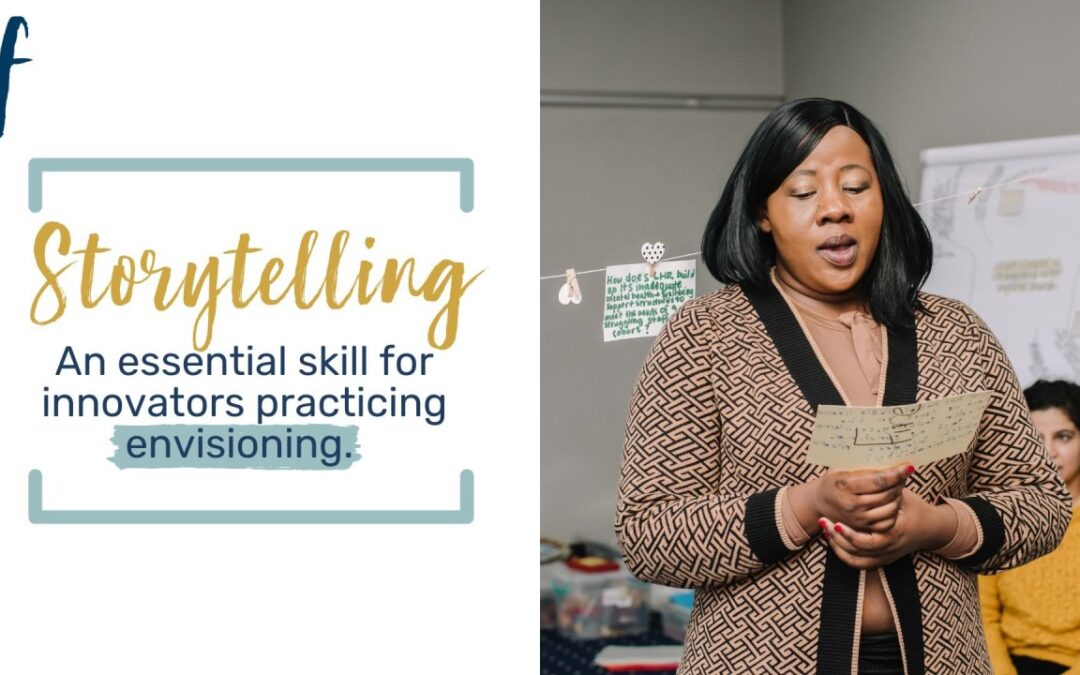
In the Innovator’s Way, Peter Denning and Robert Dunham define envisioning as the practice of transforming a possibility an innovator can sense as an idea into a compelling vision that inspires others to take practical action. It involves crafting a narrative – or telling a story – that connects the innovation to people’s needs and aspirations when it comes to solving a particular social problem, making their shared future feel real and desirable. Envisioning is not just about imagining a better future but about being able to talk about it in a way that inspires and mobilises people to work hard to support that future.
A key aspect of envisioning is the ability to create alignment—helping the people most affected by the problem see why the envisioned change matters and how they can contribute to it. This often requires the kind of storytelling that compels listeners to action by using language and metaphors that get people to think and feel deeply. Envisioning also demands iteration—testing the vision against feedback, refining it, and ensuring it remains relevant and persuasive. The storyteller, in the context or spirit of envisioning, should find themselves listening very carefully to what people have to say about the story they tell about this vision. Do they believe in it, can they claim it and own it for themselves, do they think it will materialise, is it exciting to them, do they distrust it somehow, do they feel achieving it might be a burden to them, does it exhaust them or are they worried about something completely unthought of?
Inviting the audience in turn to tell their stories, the stories that reveal them as champions or detractors of the vision, is a strength in practicing envisioning. This allows the innovator to tune in to those in their community that will support the hard work that is to come and those that might stand in its way. Envisioning is particularly crucial in the early stages of innovation. Without a strong, shared vision, even promising ideas struggle to gain momentum. Telling a story that defines what success looks like and – more importantly – why it matters helps the entire community to frame the vision. This opens the way to discussing it and co-creating stories together. These stories will take shape in the collective spaces where the innovation needs to grow. In time this enables people to commit to it. Becoming a good storyteller involves developing both the craft of storytelling and the ability to connect with an audience.
By Kathleen Dey | Lead Facilitator
Here are key principles to improve your storytelling.